
Yadadri Temple Visitor Guide
A visit to Yadadri Sri Lakshmi Narasimha Swamy Temple is much more than a pilgrimage—it is an opportunity to experience centuries of faith, rich cultural heritage, and the peaceful atmosphere of one of Telangana’s most revered hill temples. Every day, thousands of devotees from across India visit Yadadri to seek the blessings of Lord Lakshmi Narasimha, participate in sacred rituals, and admire the temple’s magnificent stone architecture.
Click To Read : Yadadri History Sthalapuranam Architechture Pancha Narasimha Visitor Guide
Whether you are planning your first visit or returning with family and friends, having the right information can make your pilgrimage smooth, comfortable, and spiritually fulfilling. From darshan timings and daily rituals to accommodation, travel options, temple facilities, dress code, and important visitor guidelines, proper planning allows devotees to spend more time in prayer and less time worrying about logistics.
This comprehensive visitor guide has been carefully prepared to help pilgrims make the most of their journey to Yadadri. It brings together practical information, travel tips, and essential details in one place, making it a reliable companion for every visitor. Whether you are travelling from Hyderabad for a one-day trip or coming from another part of India, this guide will help you plan your visit with confidence and ensure a memorable spiritual experience at the sacred abode of Sri Lakshmi Narasimha Swamy.
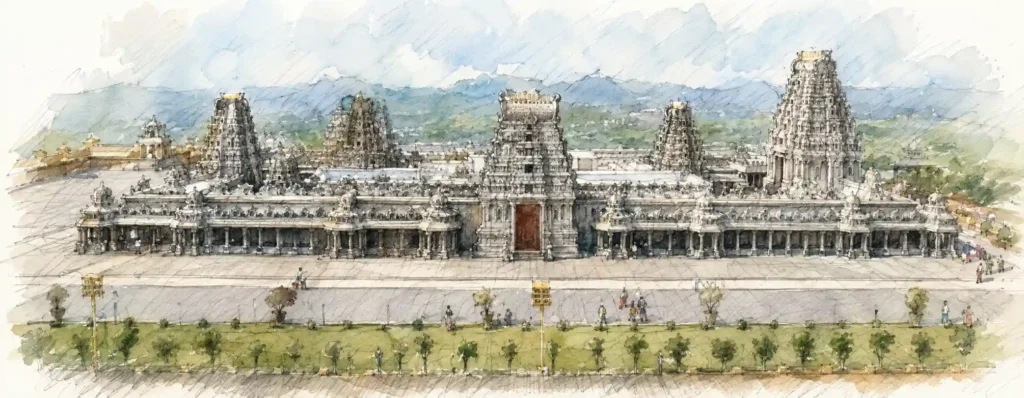
Temple Timings
Planning your visit according to the temple schedule helps ensure a smooth and peaceful darshan. Yadadri Sri Lakshmi Narasimha Swamy Temple opens its doors early in the morning, allowing devotees to participate in the first prayers of the day and seek the blessings of Lord Lakshmi Narasimha. Throughout the day, various rituals, sevas, and darshan sessions are conducted according to the temple’s traditional schedule.
The temple generally remains open from early morning until late evening, with specific timings allotted for daily rituals, special sevas, and general darshan. During major festivals, weekends, public holidays, and auspicious occasions, the schedule may be extended to accommodate the large number of pilgrims. As timings are occasionally revised by the temple administration based on festivals and special events, devotees are advised to check the latest schedule before planning their visit.
General Temple Timings
| Activity | Approximate Time |
| Temple Opens | Early Morning |
| Suprabhata Seva & Morning Rituals | Early Morning |
| General Darshan Begins | After Morning Rituals |
| Special Sevas | As per the daily schedule |
| Afternoon Darshan | Continues as scheduled |
| Evening Rituals & Harathi | Evening |
| Temple Closes | Night (after completion of rituals) |
Best Time for Darshan
For a peaceful and less crowded experience, weekday mornings are generally the best time to visit. The hours shortly after the temple opens often have shorter queues compared to weekends and festival days. Devotees wishing to attend special sevas should arrive well in advance, as entry is subject to the temple’s schedule and booking availability.
During important festivals such as Brahmotsavam, Narasimha Jayanti, Vaikunta Ekadasi, and other auspicious occasions, waiting times may be significantly longer due to the large influx of pilgrims. Visitors are encouraged to plan accordingly and allow sufficient time for security checks, queue management, and darshan.
Visitor Note: Temple timings, sevas, and darshan schedules may change during festivals or special religious events. It is always advisable to verify the latest information through the official temple authorities before your journey.
Here’s the next standalone module, written in the same style and without repeating information from previous sections.
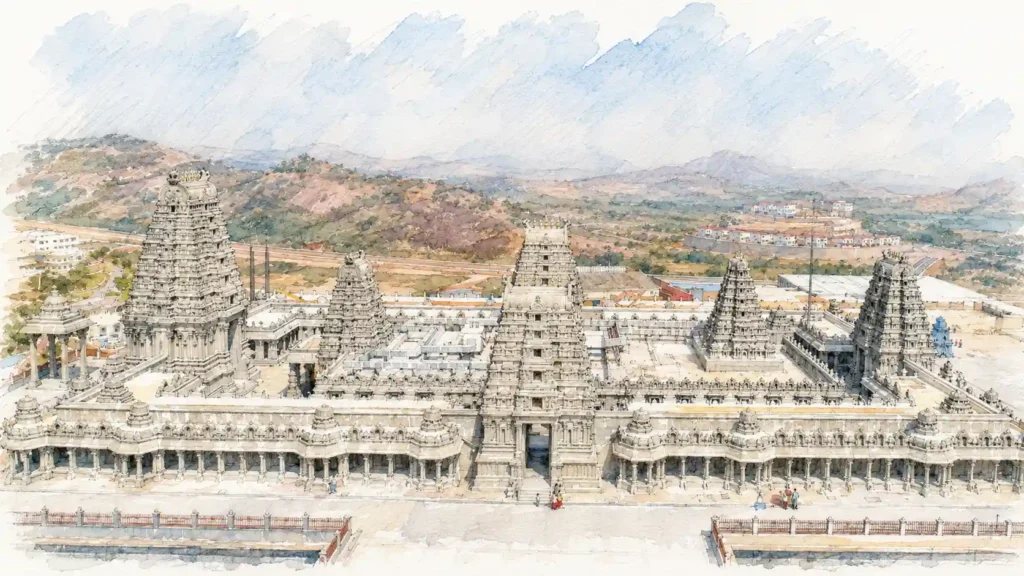
Darshan at Yadadri Temple
Darshan is the most sacred part of a visit to Yadadri Sri Lakshmi Narasimha Swamy Temple. For devotees, it is not merely the act of seeing the deity but a deeply spiritual experience of receiving the divine blessings of Lord Lakshmi Narasimha Swamy. Every day, thousands of pilgrims visit the temple with faith and devotion, making proper planning essential for a smooth and meaningful darshan.
To accommodate the large number of devotees, the temple administration has established a systematic queue management system that helps maintain order while ensuring that pilgrims can have a peaceful darshan. Depending on the day, season, and festival, devotees may choose from different darshan options that suit their convenience and schedule.
Types of Darshan
Sarva Darshan (Free Darshan)
Sarva Darshan is the regular darshan available to all devotees without any entry fee. Pilgrims enter through the designated queue lines and proceed towards the sanctum in an orderly manner. The waiting time varies depending on the day of the week, weekends, public holidays, and major festivals.
Special Darshan
The temple also provides special darshan facilities for devotees who wish to reduce waiting time. These tickets are generally available at designated counters and, where applicable, through the official online booking system. Special darshan enables pilgrims to have a more convenient visit, especially during busy periods.
Darshan During Festivals
On important occasions such as Brahmotsavam, Narasimha Jayanti, Vaikunta Ekadasi, and other auspicious festivals, the temple receives an exceptionally large number of devotees. During these times, the temple administration may introduce special arrangements, extended darshan hours, and additional queue lines to manage the increased pilgrim flow.
Online Darshan Booking
To make the pilgrimage more convenient, the temple administration offers online services for selected darshan categories and sevas. Booking in advance is particularly helpful during weekends, holidays, and festival seasons, when demand is high. Devotees should always use the official temple website for reservations and avoid relying on unofficial agents or third-party platforms.
Waiting Time
The duration of the queue depends on several factors, including:
- Day of the week
- Festival season
- Public holidays
- Special religious events
- Time of arrival
On ordinary weekdays, darshan is generally quicker, while weekends and festival days may require considerably longer waiting times.
Tips for a Peaceful Darshan
To make your visit more comfortable, consider the following suggestions:
- Arrive early in the morning for shorter queues.
- Book special darshan or sevas in advance whenever available.
- Wear traditional and modest clothing in keeping with the temple’s customs.
- Carry only essential belongings to facilitate security checks.
- Follow the instructions of temple staff and volunteers.
- Maintain silence and respect the sanctity of the temple premises.
- Avoid visiting during peak festival hours if you prefer a less crowded experience.
A Spiritually Fulfilling Experience
Regardless of the type of darshan, the true essence of visiting Yadadri lies in approaching the Lord with sincerity, humility, and devotion. While waiting in the queue may require patience, devotees often consider every step towards the sanctum as part of their spiritual journey. The peaceful atmosphere, sacred chants, and divine presence of Sri Lakshmi Narasimha Swamy make the darshan an unforgettable experience that leaves pilgrims with a sense of inner peace and renewed faith.
Here’s the next module, written as a standalone section that you can place anywhere in your article series.
Daily Rituals (Nitya Kainkaryams) at Yadadri Temple
The daily rituals performed at Yadadri Sri Lakshmi Narasimha Swamy Temple are known as Nitya Kainkaryams, meaning the sacred daily services offered to the Lord. These rituals have been followed according to the Agama Shastra for generations and form the spiritual rhythm of the temple. Every ceremony, from the first prayer at dawn to the final ritual at night, is performed with devotion, discipline, and reverence, reflecting the age-old traditions of Hindu temple worship.
For devotees, witnessing these rituals is more than a religious activity—it is an opportunity to experience the temple’s spiritual atmosphere and understand the traditional way in which the Lord is worshipped each day.
Suprabhata Seva – Welcoming the Divine
The day at Yadadri begins before sunrise with Suprabhata Seva, the ceremonial awakening of Lord Lakshmi Narasimha Swamy. Sacred hymns and devotional verses are recited to invoke the Lord’s blessings and mark the beginning of the day’s worship. This peaceful ritual sets a divine tone for all the ceremonies that follow and is considered highly auspicious by devotees.
Sacred Abhishekam
One of the most revered daily rituals is Abhishekam, the ceremonial bathing of the deity with sacred offerings such as water, milk, curd, honey, sandalwood paste, turmeric, and other traditional substances as prescribed in temple customs. This ritual symbolizes purity, devotion, and complete surrender to the Divine.
Devotees believe that witnessing or participating in Abhishekam brings spiritual purification, peace of mind, and divine blessings.
Alankaram – The Divine Adornment
After the sacred bath, the deity is beautifully decorated in a ritual known as Alankaram. Fresh flowers, fragrant garlands, traditional ornaments, silk garments, and sacred jewellery are used to adorn Lord Lakshmi Narasimha Swamy. Depending on the day, festival, or special occasion, the decoration may vary, allowing devotees to witness different divine appearances of the Lord throughout the year.
Archana – Offering Sacred Names
Archana is one of the most commonly performed daily rituals in which the priests chant the divine names of Lord Narasimha while offering flowers, tulasi leaves, and other sacred items. Many devotees participate in this ritual by offering their names and birth details, praying for health, prosperity, family welfare, success, and spiritual progress.
The chanting of the Lord’s names creates a serene atmosphere that enhances the devotional experience inside the temple.
Naivedyam – Offering of Sacred Food
During Naivedyam, freshly prepared food is respectfully offered to the Lord as an expression of gratitude and devotion. According to Hindu tradition, every offering made with sincerity is first dedicated to God before it is shared among devotees as Prasadam.
This ritual reminds devotees that all blessings and nourishment ultimately come from the Divine.
Harathi – The Offering of Light
Several times during the day, priests perform Harathi, waving sacred lamps before the deity while Vedic chants and devotional hymns fill the temple. The glowing lamps symbolize the victory of knowledge over ignorance and the removal of darkness from one’s life.
Many devotees consider witnessing the Harathi to be one of the most spiritually uplifting moments of their visit to Yadadri Temple.
Evening Worship and Ekanta Seva
As the day draws to a close, the temple conducts its evening worship with the same devotion and discipline observed throughout the day. The final ritual, traditionally known as Ekanta Seva, marks the conclusion of the day’s worship. During this ceremony, prayers are offered before the temple is ceremonially closed for the night, signifying that the Lord is respectfully offered rest until the next day’s Suprabhata Seva.
The Spiritual Importance of Daily Rituals
The daily rituals at Yadadri Temple are not merely ceremonial practices; they represent an unbroken tradition of devotion that has been preserved through generations. Every offering, chant, and prayer reflects the timeless relationship between the devotee and the Divine.
For pilgrims, participating in or witnessing these sacred rituals transforms a temple visit into a deeply spiritual experience. The sound of Vedic chanting, the fragrance of flowers and incense, the glow of sacred lamps, and the disciplined performance of each ritual create an atmosphere of peace and devotion that leaves a lasting impression on every visitor.

Dress Code at Yadadri Temple
Yadadri Sri Lakshmi Narasimha Swamy Temple is one of the most sacred pilgrimage centres dedicated to Lord Lakshmi Narasimha. As a mark of respect for the deity and the temple’s spiritual traditions, devotees are encouraged to wear modest, clean, and traditional attire while visiting the temple. Dressing appropriately not only reflects reverence for the sacred place but also enhances the spiritual atmosphere for everyone.
Although there is no elaborate mandatory dress code for general darshan, traditional Indian clothing is highly recommended, especially for devotees participating in special sevas and religious ceremonies.
Poojas & Sevas at Yadadri Temple
At Yadadri Sri Lakshmi Narasimha Swamy Temple, worship is not limited to offering prayers during darshan. Devotees also have the opportunity to participate in a variety of poojas and sevas, each performed according to the sacred traditions of Agama Shastra. These rituals allow devotees to express their devotion, seek divine blessings, and offer gratitude to Lord Lakshmi Narasimha Swamy for the well-being of their families and loved ones.
A pooja is a sacred act of worship performed by temple priests through Vedic chants, offerings, and prayers. A seva refers to a devotional service offered to the deity, either on behalf of an individual devotee or as part of the temple’s daily and special worship. Participating in these rituals is considered highly auspicious and is believed to bring peace, prosperity, good health, and spiritual progress.
Daily Sevas
Several sevas are performed every day as part of the temple’s regular worship schedule. Some of the most popular include:
- Archana – The priest chants the divine names of Lord Lakshmi Narasimha while offering flowers and sacred leaves, praying for the devotee’s well-being.
- Abhishekam – A ceremonial sacred bath offered to the deity using traditional materials prescribed in temple customs. This ritual symbolizes purity and complete surrender to the Divine.
- Alankaram – The Lord is beautifully adorned with flowers, silk garments, ornaments, and fragrant garlands before devotees receive darshan.
- Harathi – Sacred lamps are offered to the deity amidst Vedic chanting and devotional hymns, creating a spiritually uplifting atmosphere.
Special Sevas
In addition to the daily rituals, the temple conducts special sevas on auspicious days and during important festivals. These may include:
- Kalyanotsavam – A ceremonial celebration of the divine wedding of Lord Lakshmi Narasimha and Goddess Lakshmi, performed for family harmony, prosperity, and marital happiness.
- Sahasranama Archana – A special worship in which the thousand sacred names of the Lord are recited with devotion.
- Festival Sevas – Unique rituals conducted during Brahmotsavam, Narasimha Jayanti, Vaikunta Ekadasi, and other major celebrations.
The availability of these sevas may vary depending on the temple calendar and special religious occasions.
Booking Sevas
Many sevas require prior registration due to limited participation. Devotees may book eligible sevas through the official temple booking system or at authorized temple counters, subject to availability. Booking in advance is especially recommended during weekends, public holidays, and festival seasons when demand is considerably higher.
Spiritual Significance
Every pooja and seva at Yadadri Temple carries a deeper spiritual meaning. Rather than being mere rituals, they represent expressions of faith, gratitude, and surrender to the Divine. Devotees believe that sincere participation in these sacred services strengthens their spiritual connection with Lord Lakshmi Narasimha, brings inner peace, and invokes His blessings for a righteous and prosperous life.
Whether one participates in a simple Archana or a grand Kalyanotsavam, the true essence of every seva lies in devotion offered with humility and a pure heart.
Major Festivals Celebrated at Yadadri Temple
Throughout the year, Yadadri Sri Lakshmi Narasimha Swamy Temple comes alive with vibrant celebrations that reflect the rich spiritual and cultural traditions of Hinduism. During these festivals, the temple is beautifully decorated with flowers, lights, and colourful ornaments, while thousands of devotees gather to participate in special poojas, processions, devotional music, and religious ceremonies. These celebrations not only honour Lord Lakshmi Narasimha Swamy but also strengthen the bond between faith, culture, and community.
Sri Lakshmi Narasimha Brahmotsavam
The annual Brahmotsavam is one of the grandest festivals celebrated at Yadadri Temple. Spanning several days, it includes special Vedic rituals, ceremonial processions of the deity on different Vahanams (divine vehicles), cultural programmes, and elaborate temple decorations. Pilgrims from across the country visit Yadadri during this festival to witness the divine celebrations and seek the blessings of the Lord.
Narasimha Jayanti
Narasimha Jayanti commemorates the divine appearance of Lord Narasimha, the fourth incarnation of Lord Vishnu. It is one of the most sacred occasions at Yadadri Temple. Special Abhishekams, Vedic chanting, homams, and devotional programmes are conducted throughout the day. Devotees observe fasting, participate in prayers, and offer special worship seeking courage, protection, and divine grace.
Vaikunta Ekadasi
Celebrated with great devotion, Vaikunta Ekadasi is regarded as one of the holiest days in the Vaishnavite tradition. On this auspicious occasion, devotees believe that worshipping Lord Vishnu opens the path to spiritual liberation. The temple witnesses heavy pilgrim turnout, with special darshan arrangements and extended worship programmes.
Karthika Masam
The holy month of Karthika Masam attracts large numbers of devotees who visit the temple to perform deepa seva, offer prayers, and participate in special religious activities. The temple premises glow with the light of countless oil lamps, creating a serene and spiritually uplifting atmosphere.
Swathi Nakshatram
Since Swathi Nakshatram is traditionally associated with Lord Narasimha, every occurrence of this sacred star is observed with special poojas and rituals. Many devotees choose this auspicious day to perform Archana and other sevas, believing it brings divine protection and prosperity.
Other Auspicious Celebrations
The temple also celebrates several important Hindu festivals, including Ugadi, Rama Navami, Deepavali, Mukkoti Ekadasi, and other significant occasions according to the temple calendar. Each festival is marked by special worship, devotional music, cultural events, and increased participation from devotees.
A Celebration of Faith and Devotion
Festivals at Yadadri Temple are more than religious events—they are vibrant expressions of devotion, tradition, and community spirit. The chanting of Vedic hymns, the fragrance of flowers and incense, the brilliance of illuminated mandapams, and the joyous participation of devotees create an atmosphere that leaves a lasting spiritual impression.
For pilgrims, attending a festival at Yadadri is an opportunity not only to witness magnificent celebrations but also to experience the timeless devotion that has made this sacred hill one of Telangana’s most cherished pilgrimage destinations.