
Why Do We Celebrate Holi? The Deep Significance Behind India’s Festival of Colors
Understanding the spiritual meaning, regional celebrations, and sacred symbolism that make Holi more than just a color festival
The Sacred Significance of Holi
A Festival of Multiple Meanings
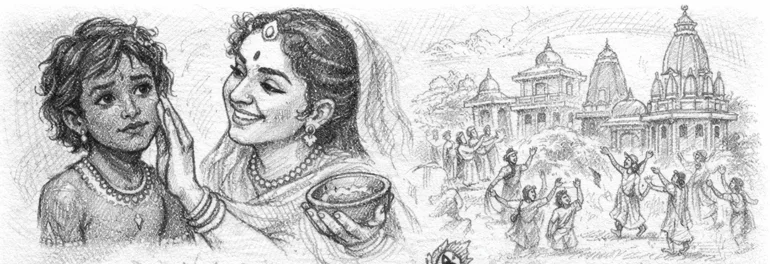
Holi isn’t just one celebration — it’s a beautiful tapestry woven from multiple sacred threads. Every color thrown, every song sung, and every sweet shared carries profound spiritual meaning that has enriched Indian culture for over 3,000 years.
Also Read : Holi Festival Stories: The Sacred Tales Behind India’s Festival of Colors Holi
First, Holi marks the victory of good over evil. When Prahlad emerged unharmed from Holika’s fire, the universe witnessed that truth and devotion can never be destroyed. The Holika Dahan bonfire we light every year isn’t just a ritual — it’s a symbolic burning of all negativity, jealousy, and evil within us.
Second, Holi celebrates the arrival of spring — nature’s most joyful season. After the cold, barren winter, the earth bursts into colorful bloom. Farmers rejoice at the new harvest. Fields turn golden with wheat and mustard. This is why Holi is also called Vasant Mahotsav (Spring Festival) in many parts of India.
Third, Holi is the festival of love and unity. When Krishna played with colors regardless of caste or status, he showed us that true love dissolves all boundaries. On Holi, the rich and poor, young and old, stand equal — drenched in the same colors, sharing the same laughter.
The Day of Forgiveness
Perhaps Holi’s most beautiful significance is often overlooked. This is the day when India forgives. Old grudges are forgotten, broken relationships mend, and enemies become friends. People visit those they’ve argued with, apply colors on their faces, and embrace with genuine warmth. “Bura na mano, Holi hai!” (Don’t mind, it’s Holi!) isn’t just a phrase — it’s a spiritual practice of letting go.
The Sacred Language of Holi Colors
Every Color Tells a Divine Story
When you smear colors during Holi, you’re not just playing — you’re speaking an ancient spiritual language.
Red (Lal) represents love, fertility, and matrimony. It’s the color of Radha’s devotion and every bride’s joy. Red gulal on someone’s face is a blessing of love and prosperity.
Yellow (Peela) comes from turmeric — the sacred spice of Indian culture. It symbolizes auspiciousness, healing, and the divine glow of knowledge. Yellow is why brides and grooms are anointed with haldi before marriage.
Green (Hara) embodies new beginnings, spring’s arrival, and nature’s abundance. It represents hope, fertility, and the harvest that sustains our lives.
Blue (Neela) is Krishna’s color — the color of the infinite sky and the fathomless ocean. It represents the divine depth that exists within every soul.
Orange (Narangi) radiates optimism, energy, and the rising sun’s warmth. It’s the color of saffron robes worn by sadhus and the eternal flame of spiritual seeking. In ancient times, these weren’t synthetic powders but natural colors made from flowers, herbs, and spices — holi colors that healed the skin while coloring it!
How India Celebrates Holi — A Regional Tapestry
Every State, A Unique Celebration
India’s diversity shines brightest during Holi. While the spirit remains the same, each region adds its own sacred flavor.
In Mathura and Vrindavan (Uttar Pradesh) — Krishna’s birthplace — celebrations last for sixteen days! Lathmar Holi in Barsana sees women playfully beating men with sticks, reenacting Radha’s friends chasing away Krishna’s mischief. Phoolon ki Holi (Flower Holi) at Banke Bihari temple uses only flower petals — no colors — creating a fragrant, gentle celebration.
In Punjab, Sikhs celebrate Hola Mohalla the day after Holi. Established by Guru Gobind Singh, it features martial arts displays, sword fighting, and demonstrations of Sikh warrior spirit — transforming playfulness into strength.
In West Bengal, Holi becomes Dol Jatra or Basanta Utsav. Devotees carry idols of Radha and Krishna on decorated swings (dol), singing Rabindra Sangeet and playing with colors in a more restrained, artistic manner.
In Maharashtra, they celebrate Rang Panchami five days after Holi, believing this is when Krishna actually played with colors. The celebrations are equally vibrant but spread across more days.
In South India — Tamil Nadu, Karnataka, and Andhra Pradesh — Holi is observed as Kamadahana, focusing more on the Shiva-Kamadeva legend. The celebration is subtler, with prayers and traditional rituals taking center stage over color play.
In Rajasthan, the royal state celebrates with royal grandeur. Jaipur’s Elephant Festival coincides with Holi, featuring decorated elephants, folk dances, and spectacular color processions.
The Timeless Message for Today’s World
In our modern age of division — where people fight over religion, caste, color, and status — Holi’s message rings more urgently than ever. When colors drench everyone equally, all differences disappear. The CEO and the watchman, the Brahmin and the Dalit, the Hindu and the Muslim — all become simply humans covered in the same joyful colors.
This is Holi’s eternal wisdom: beneath our external differences, we’re all made of the same divine essence. We celebrate not to escape reality, but to remember this sacred truth.
Keywords: Why celebrate Holi, Holi significance, Holi colors meaning, Holi celebrations India, regional Holi traditions, spiritual meaning of Holi, होली क्यों मनाई जाती है
Why Do We Celebrate Holi? The Deep Significance Behind India’s Festival of Colors
Holi Festival Stories: The Sacred Tales Behind India’s Festival of Colors Holi
Holi Celebration Dates Guide with time
Gyanavedam Categories :
Analytical Articles | Children’s Stories | Education – Building Knowledge | History and Heritage | Indian Temples and Sacred Places
Knowledge & Facts | Do You Know | Sanathana Dharma | Videos & YouTube Channel